
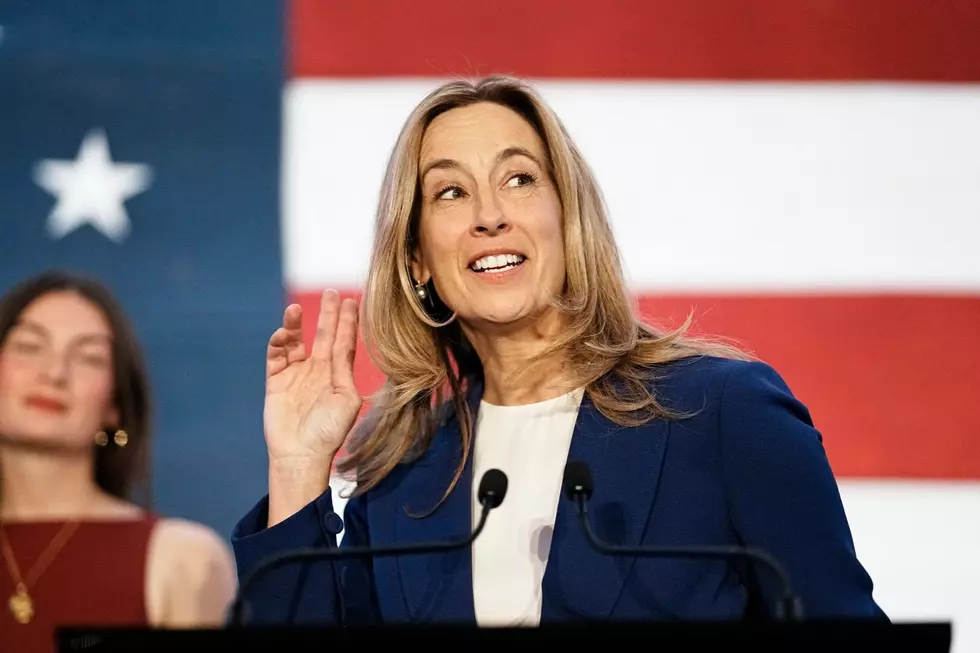
NJ Gov. Sherrill says ‘Yes’ to ending the Electoral College
❗ Gov. Mikie Sherrill told MS NOW she supports abolishing the Electoral College and electing presidents by popular vote.
➡️ NJ joined the national popular vote compact in 2008, and participating states hold 222 electoral votes.
❓ The compact needs 270 to take effect, and conservative groups are expected to challenge it in court.
New Jersey Gov. Mikie Sherrill is joining her fellow Democrats’ calls to abolish the Electoral College and elect U.S. presidents with the national popular vote, saying a New Jersey vote is worth “about one-fifth” of a Wyoming vote.
Sherrill made the comments Friday during an appearance on MS NOW's On the Line with Alicia Menendez. The governor gave a quick "yes" when asked whether she supported eliminating the Electoral College.

"Our votes in New Jersey are worth about one-fifth of what a vote in Wyoming is, for example. That's not democracy. Certainly, I think really creating direct vote for people for the president would be fantastic," Sherrill said.
Under the current Electoral College system, a candidate needs 270 electoral votes to win. New Jersey has 9.5 million residents and 14 electoral votes; Wyoming has fewer than 600,000 residents and three electoral votes.
State Sen. Michael Testa, R-Atlantic, said in a statement the governor should focus more on affordability and less on her "audition for President of the United States."
“If Governor Sherrill wanted to spend all her time talking about Washington, she should have stayed in Congress. But in New Jersey, families are more worried about opening their electric bill or their property tax bill than the Governor’s ill-informed opinions on the Electoral College," Testa said.
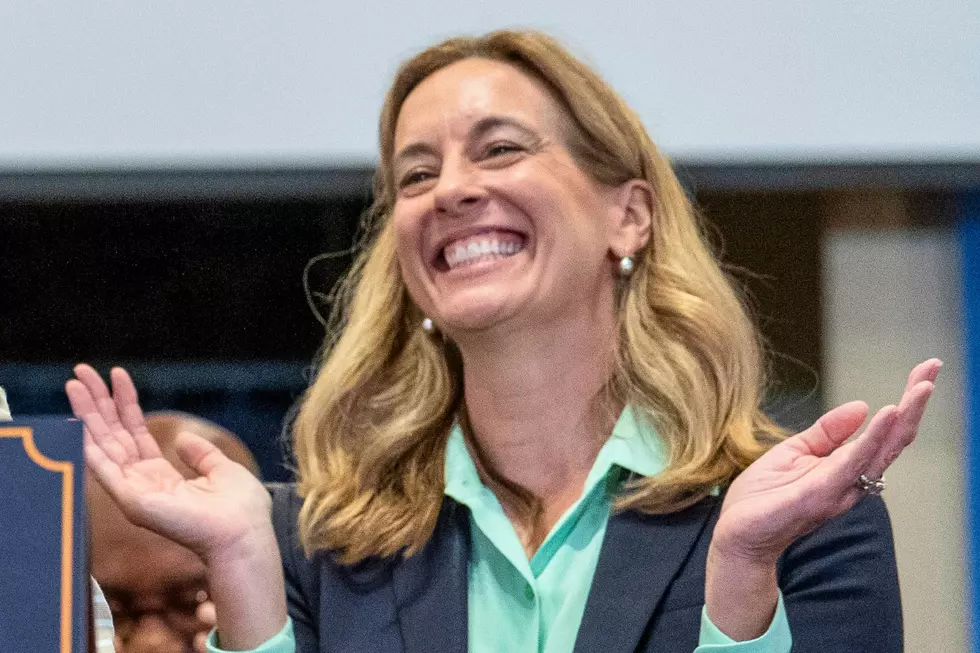
NJ joined the national popular vote compact in 2008, but it’s still short of 270
In 2008, New Jersey joined a compact to give the state's electoral votes to the winner of the national popular vote. Then-Gov. Jon Corzine signed the legislation, making New Jersey the second state to join the compact. Maryland was the first. The compact would only take effect if enough states agreed to it.
Now, with so many state governments flipping to Democratic control, those states could also change how the U.S. elects a president.
The states, including New Jersey, that have joined what is known as the National Popular Vote Interstate Compact account for 222 Electoral College votes. Once the number of states involved hits the 270 needed to win the presidency, the arrangement would effectively require a candidate to win the national popular vote to get an Electoral College majority.
The sudden blue tint to so many more statehouses opens the door to enough states joining 18 other Democratic-run states in a deal that would effectively neuter the Electoral College. It would remake the battle for the presidency into one for the most votes nationwide, rather than candidates concentrating on a half dozen or so swing states.

Legal challenges, and possibly the Supreme Court, could follow
It's not clear that the strategy has support from all the newly elected lawmakers and governors in the key states, and it's almost certain to draw legal challenges from conservative groups. If it does go forward, it could land before the conservative-majority Supreme Court.
Yet the sweep of the Democratic wins for governor and in state legislatures has the plan's supporters optimistic. Democrats won full control in six states representing 71 Electoral College votes: Arizona, Michigan, Minnesota, Nevada, Pennsylvania and Wisconsin. Minnesota, with its 10 electoral votes, had joined the compact when it was previously under full Democratic control in 2023.
Wisconsin and Pennsylvania governors back the idea. Republicans push back
Sherrill is not the first Democrat to make renewed calls to change presidential elections.
“We can do away with it,” Wisconsin's new Democratic Gov. David Crowley said of the Electoral College, now that he has a legislature in his party's hands for the first time in 16 years.
Pennsylvania Gov. Josh Shapiro, a likely 2028 contender for the Democratic presidential nomination, said he would like his newly Democratic legislature to take steps toward making the Electoral College obsolete.
"I think that the national popular vote makes sense. My views on that have not changed," Shapiro said on a liberal podcast.
Republicans will use their diminished power to push back.
“Our Constitution gives states a voice in choosing the president for a reason,” Tyler August, the Republican leader in the Wisconsin Assembly, said in a statement Tuesday. “This would undermine that balance and disenfranchise Wisconsin voters by letting results in other states override their choice."
(Includes materials Copyright 2025 The Associated Press. All rights reserved. This material may not be published, broadcast, rewritten or redistributed without permission)
Report a correction 👈 | 👉 Contact our newsroom
How your town in NJ voted for governor in 2025
Gallery Credit: New Jersey 101.5
